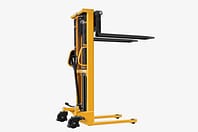
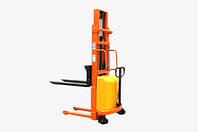
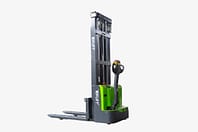
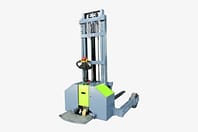
A manufacturing company in Egypt needed an electric handling unit to move materials alongside its machines and raise them to the loading position. The requirement was for a compact unit suited to work inside the factory, handling approximately 1,000–1,200 kg at a lifting height of around 2 m.
During equipment selection, the customer raised a practical question: Would the position of the forks and front wheels make it difficult to approach the machine?
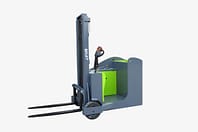
DFLIFT worked with the customer to compare equipment options and confirm the purchase of one DGXP-10A electric counterbalance stacker. Support also covered charger coordination, production updates, packing information, and preparations for collection and import into Egypt.
The customer initially requested a unit for handling approximately 1,000 kg. Further discussion clarified the task: loads would not exceed 1,200 kg, the required lifting height was around 2 m, and the unit would be used inside the factory to load machines.
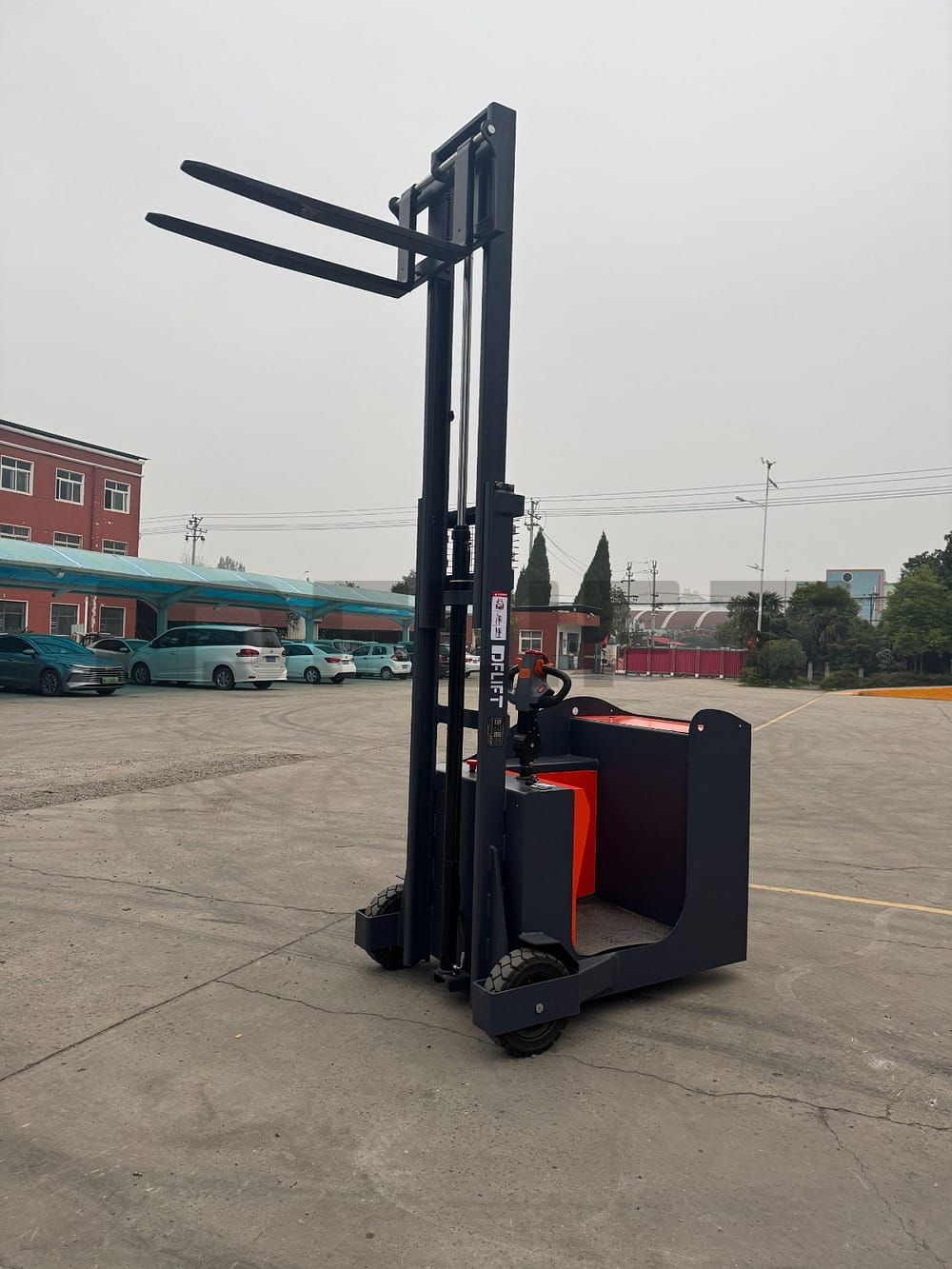
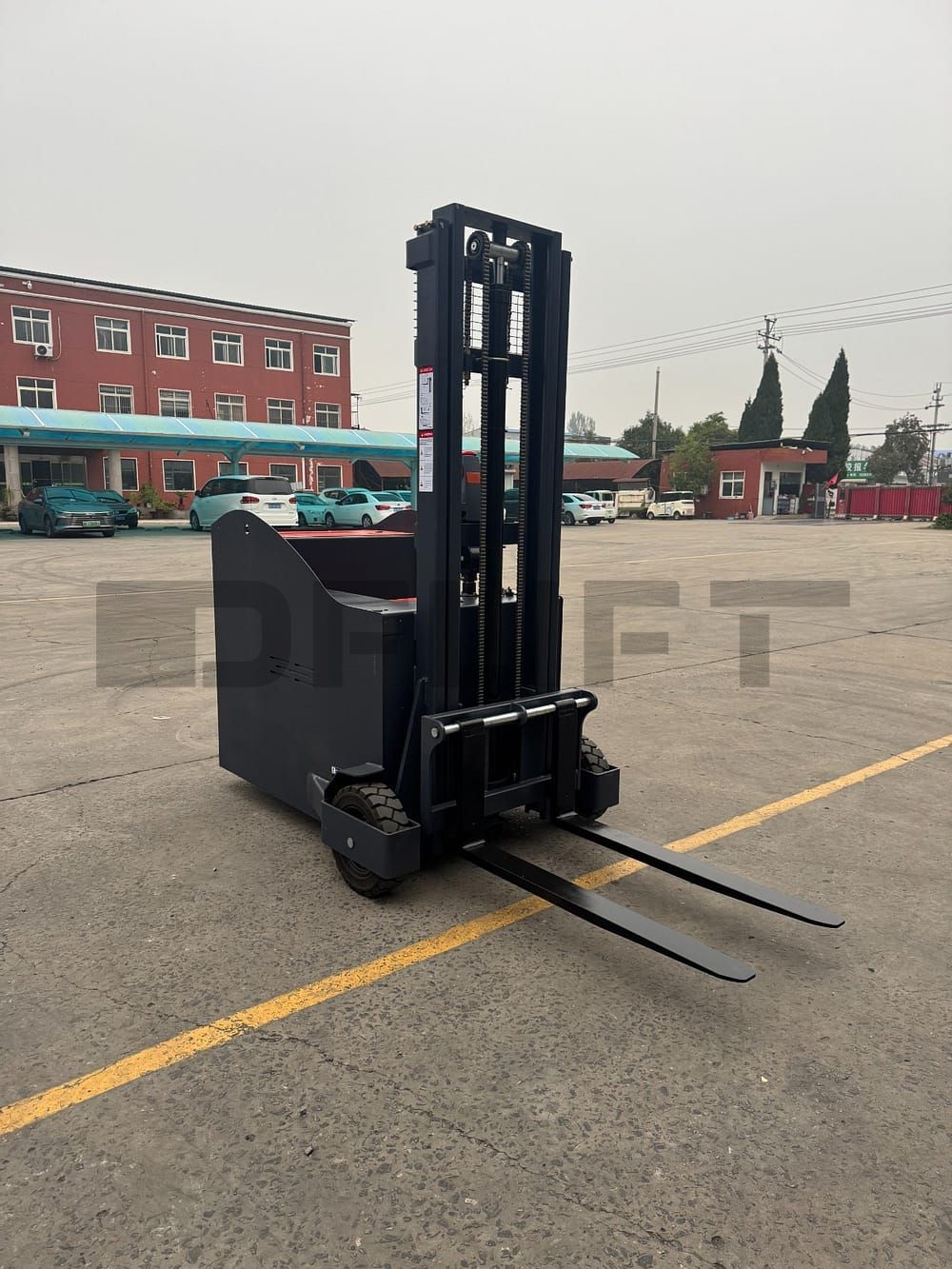
Lifting the material was only part of the job. The forks also needed to reach the required loading position. The customer wanted the forks to extend beyond the front wheels so the unit could approach the machine more conveniently, making the body size and fork-to-wheel arrangement key points in the selection process.
We initially recommended models including the CQDA10-25 and CQDA15-25 and shared their specifications to help the customer compare equipment layouts, load capacities, and operating space requirements. Our sales team also checked model availability with the engineers as the customer reviewed the options.
After comparing the proposals, the customer selected one DGXP-10A electric counterbalance stacker. Its battery-powered, stand-on configuration and maximum load capacity of 1,200 kg corresponded to the handling requirement discussed with the customer.
| Pozycja | Selected Equipment |
|---|---|
| Model | DGXP-10A electric counterbalance stacker |
| Quantity | 1 unit |
| Maximum load capacity | 1,200 kg |
| Wymiary widelca | 1,070 × 140 × 35 mm |
| Źródło zasilania | Bateria |
| Battery voltage and capacity | 24 V / 200 Ah |
| Operation | Stanie na |
The customer planned to start with one unit and indicated that further purchases might follow after receiving the first. We explained both the equipment and the supporting arrangements to help the customer prepare for this purchase.
Once the equipment had been selected, the customer asked whether a charger was included. We confirmed that the charger would be supplied with the unit.
The team then shared a plug-type comparison chart. The customer selected the European-standard option and explained that their existing equipment used a larger 380 V plug, prompting further questions about the new unit’s charging connections.
We explained the purpose of the connection, supplied a photograph of the charger, and confirmed that a plug change would be arranged to match the selected type. The comparison chart gave both sides a specific option to refer to, while the photograph helped explain the charger and its connections.
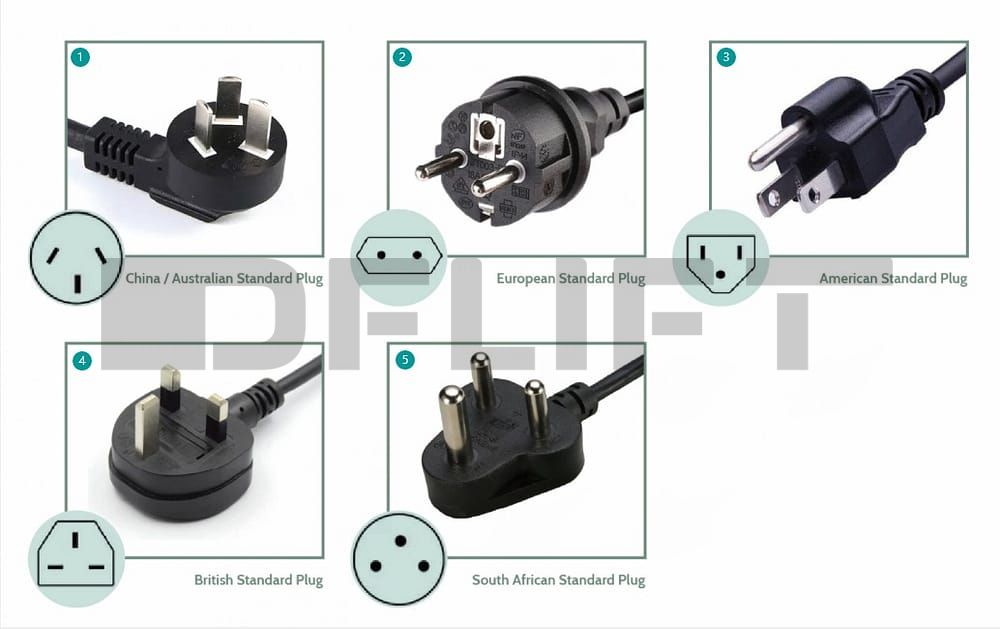
The customer selected option 2, the European-standard plug shown in the chart.
Charger availability was also included in production coordination. When the warehouse advised that the charger still required additional time, we updated the customer so they could plan around the readiness of both the stacker and its charging equipment.
For a buyer in Egypt, equipment specifications were only one part of purchase planning. Production updates and photographs of the actual unit were also important.
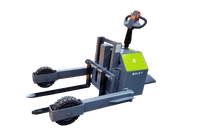
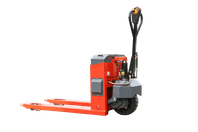
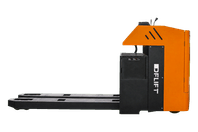
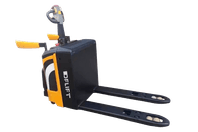
We kept the customer informed as the equipment was prepared and agreed in advance to provide photos. As preparation progressed, the team sent a series of views showing the forks in the lowered position, the raised mast, the sides and rear of the unit, and the stand-on operator area.
These views gave the customer a visual reference for the earlier discussions about fork position and equipment layout. They could examine the mast, control handle, operator area, and fork arrangement in more detail.
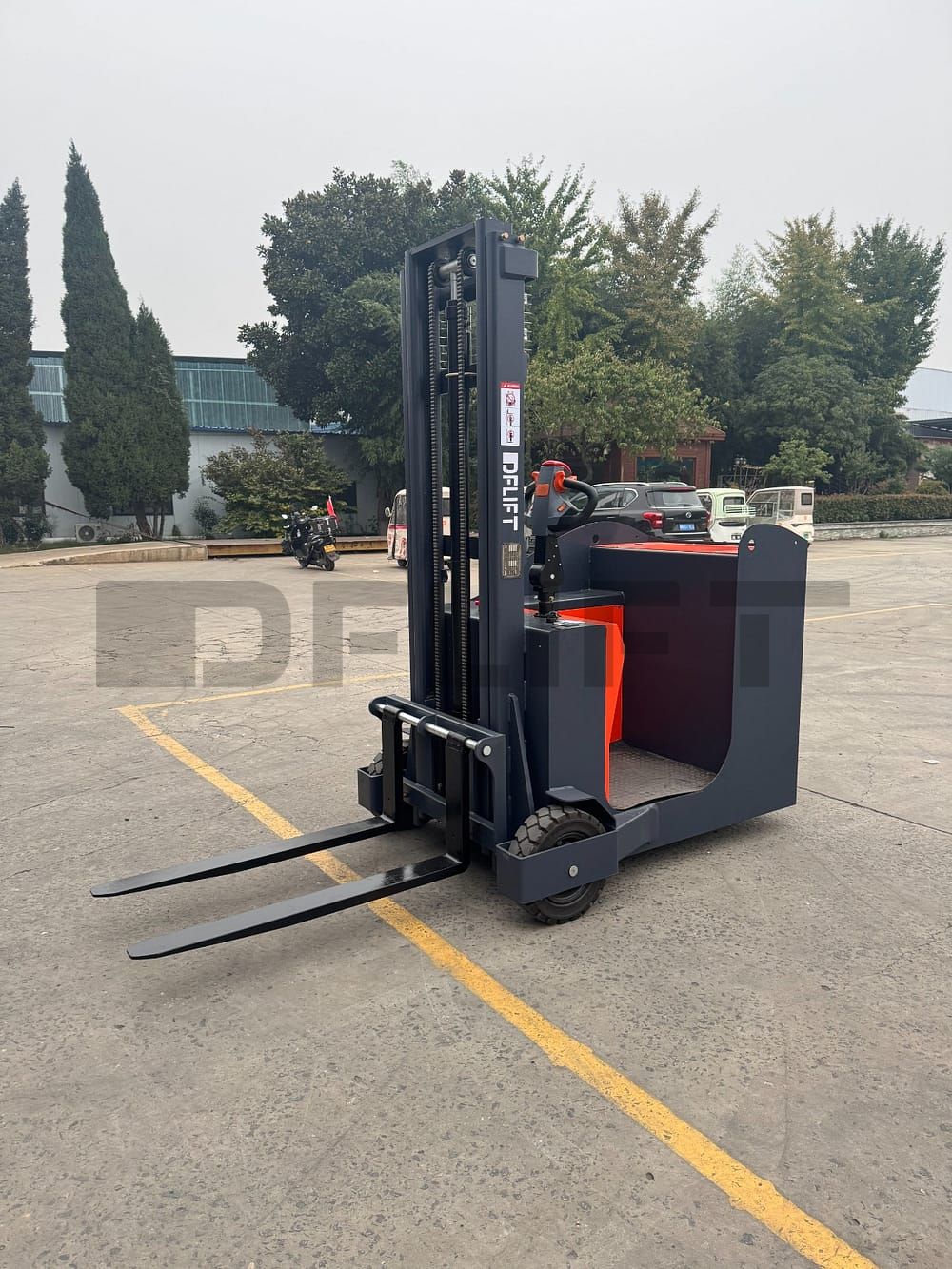
A raised-mast view showing the mast, chains, and fork arrangement.
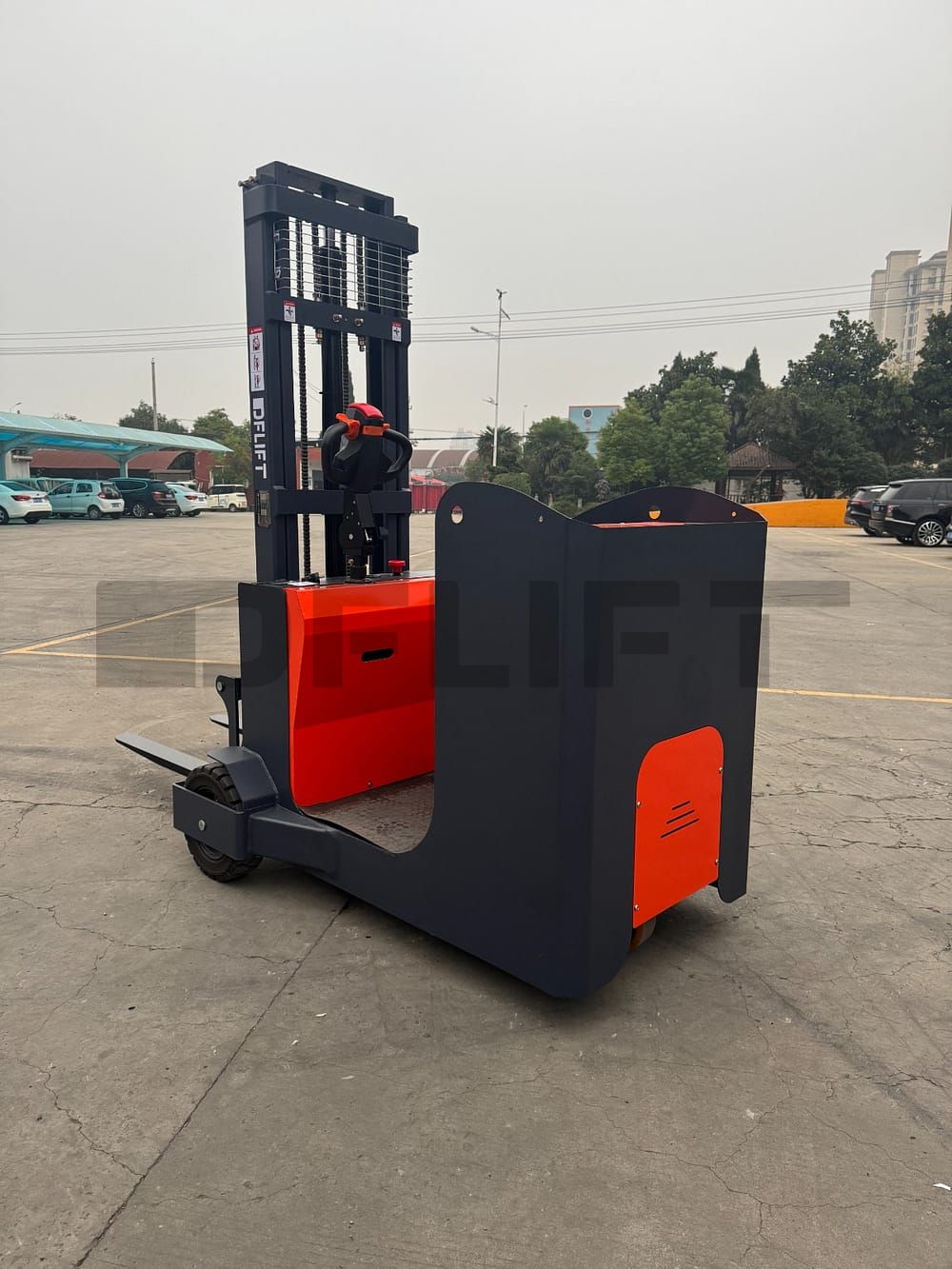
The rear-side view shows the operator area, control handle, and body layout.
From specification comparisons during selection to photographs during equipment preparation, we supplied information the customer could review remotely while getting ready for collection.
The customer appointed a transport provider to collect the equipment. To request freight quotations and arrange pickup, they needed information on dimensions, weight, and packing.
We proposed wooden-box or pallet packing and helped check the relevant measurements. When the customer noticed differences between dimension figures, they asked whether the forks were included. The team rechecked the information and clarified the dimensions excluding the forks, helping distinguish the unit’s body dimensions from its overall size with the forks included.
How the equipment length is measured, whether the forks are included, and the dimensions after packing all affect freight quotations and collection arrangements. Clear explanations gave the customer a better basis for planning with their transport provider.
The team also provided the collection address and followed up on contact details for the customer’s appointed freight forwarder to coordinate the handover preparations.
The customer also requested support with information for importing into Egypt, including ACID-related details and exporter information for CargoX.
We provided exporter registration information and continued checking the import details and freight-forwarder information supplied by the customer. The customer handled local import and transport arrangements, while DFLIFT supported supplier information, equipment documentation, and collection coordination so both sides could progress their preparations.
For factories with similar machine-loading requirements, equipment selection can begin with load weight, lifting height, and access to the machine, followed by a comparison of fork and wheel layout, charging equipment, and operating space.
Contact DFLIFT with your loading position, material dimensions, and available operating space. Our team can recommend electric handling equipment and support product confirmation and collection preparations for overseas purchases.

Nazywam się Yuki. Pracuję w tej branży od dziesięciu lat. Zapewniam wsparcie w postaci doskonałych cen i doskonałej obsługi. Oferujemy również kompletne produkty i serwis posprzedażowy. W razie pytań dotyczących produktu, ceny lub serwisu posprzedażowego, możesz się ze mną skontaktować. Potrafię rozwiązać dla Ciebie wiele problemów.

Pobierz cennik produktów bezpośrednio do swojej skrzynki pocztowej.